
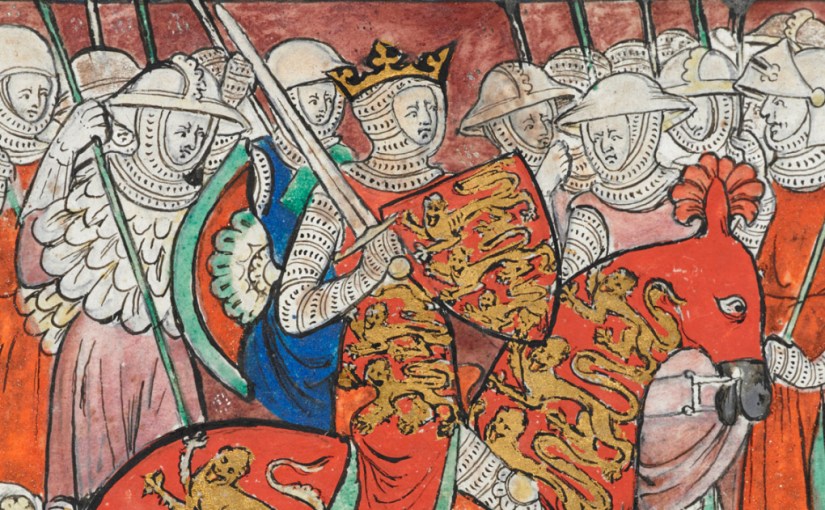
With the first coronation of an English monarch in nearly seventy years, I’ve been inspired to rouse myself out of inactivity to take a look at our own ancestral ties to the English monarchy – and we have some! Tracing one’s family back to European royalty seems to have been a preoccupation of many family genealogists a hundred years ago or so, and I’ve stumbled on many unsubstantiated – and some outright disproven – attempts to do so among people researching our own ancestors. Still, some of those ties do exist, and the most clearly delineated royal line connects to the Backus surname via a woman with the wonderful name of Love Kingsbury, who married Josiah Backus in Norwich, Connecticut in 1732 (Josiah being the great-grandson of our original ancestor William Backus).
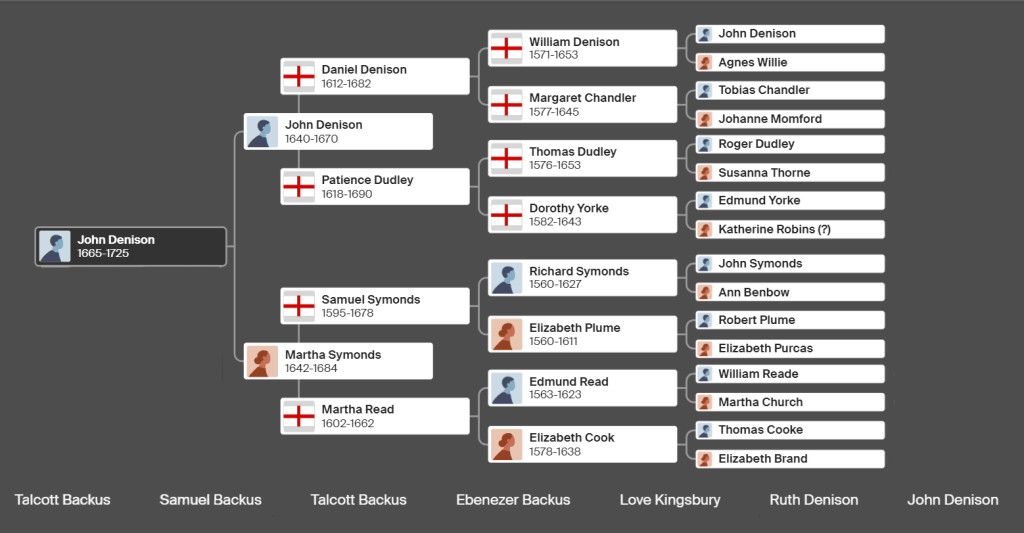
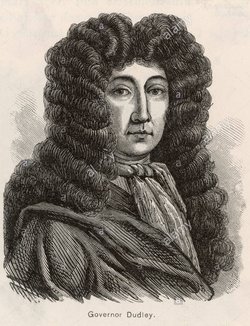
Through Love Kingsbury we can trace our way back to my generation’s 10th great grandmother Patience Dudley, who was descended from British royalty on both sides of her family. Her father was Thomas Dudley, the principal founder of Newtown, Massachusetts (which would become Cambridge) as well the governor of the Massachusetts Bay Colony a few times over. Dudley was already fifty-three years old when he arrived in Massachusetts in 1630, and he seems like a man from a bygone age even by seventeenth century colonial standards. Born in 1576 to the upper class, at the age of twenty he raised a company of soldiers to fight on the continent at the behest of Queen Elizabeth I for the Protestant cause in the French Wars of Religion.
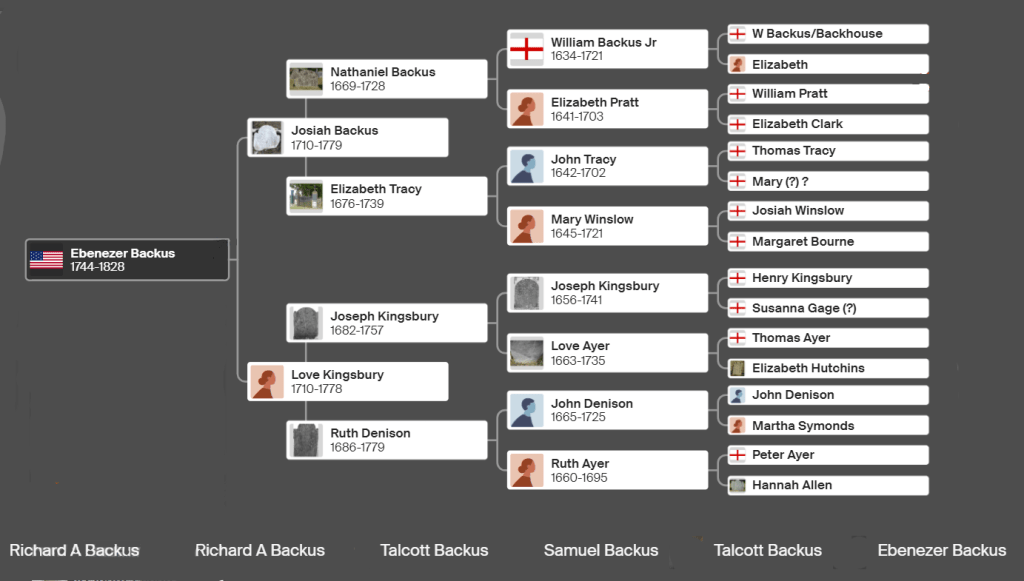
After his military service Dudley became sympathetic to puritanism, and by 1616 was serving as the steward for Theophilus Clinton, the 4th Earl of Lincoln at his estate in Sempringham. Lincoln, a son in law of Viscount Saye, was one of the chief puritan political opponents of King Charles I, and it was at Sempringham where plans were initially hatched that would ultimately lead to the creation of the Massachusetts Bay Colony. When the eleven ships of the Winthrop Fleet set sail for North America in 1630, Thomas Dudley was on board the flagship Arabella as the Deputy Governor to John Winthrop. Dudley would himself eventually serve four one-year terms as Governor of Massachusetts and sign the charter that established Harvard College.
Dudley was most likely the grandson of Sir Henry Dudley, but direct evidence is lacking. Instead, we can trace his royal lineage through his mother, Susannah Thorne, who was a descendant of Richard FitzRoy, the “bastard” son of King John (FitzRoy, or “Son of the King ”, was the surname the Normans gave to the out-of-wedlock offspring of their monarchs). Thomas Dudley’s wife, Dorothy of Yorke, reveals more lines to the English crown. Through her we can make our way back to the fourteenth century and Joan de Greystoke, whose parents, John de Greystoke and Elizabeth de Ferrers, were both Anglo-Norman descendants of William the Conqueror. They share a common ancestor in Robert FitzRoy, the son of King Henry I, while Elizabeth de Ferrers also has a slightly more immediate connection to the royal family through her mother, Joan Beaufort, who was the daughter of John of Gaunt, the Duke of Lancaster and the third son of King Edward III. There are a couple of other connections as well, but, alas, none that will give any of us even a distant claim to the English crown, as all of these royal ancestors were born out of wedlock, and therefore officially removed from the line of succession.
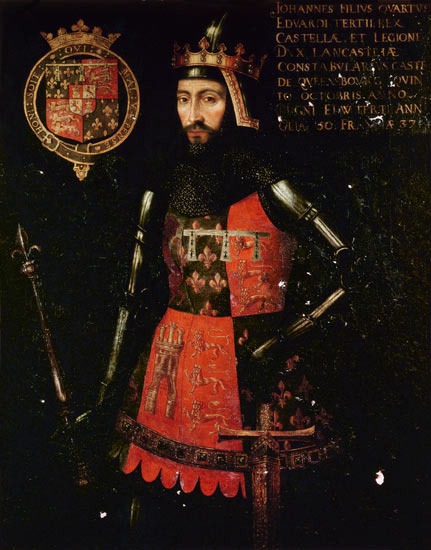
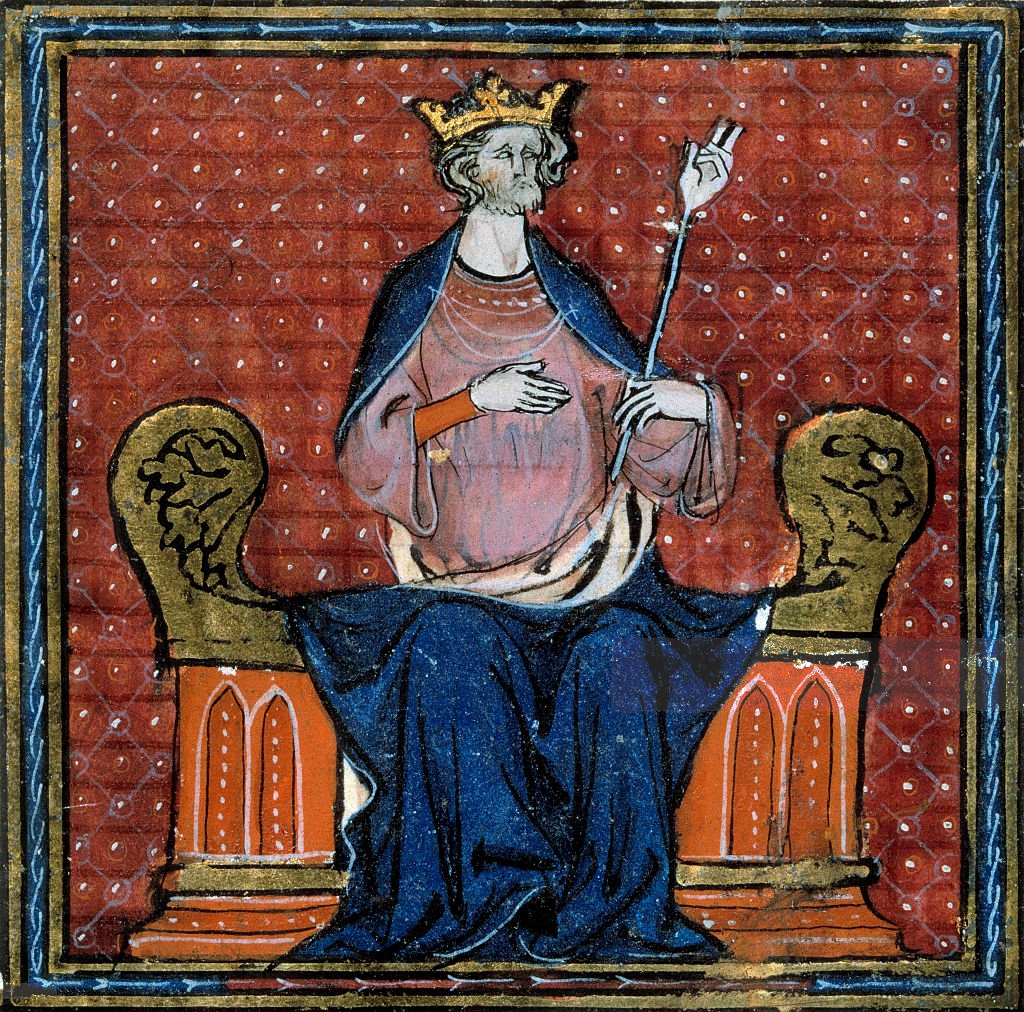
Still, all of these lines link us directly back to the Plantagenet dynasty of medieval England, and once you break into a royal line, royal matchmaking makes one a descendant of monarchs across both medieval Britain and Europe. Fancy a connection to the Celtic Britons? We can trace our lineage back to Llewelyn the Great, one of the last rulers of Wales who was actually Welsh. Wish you had Irish ancestry on St. Patrick’s Day? The Backuses are direct descendants of Diarmait mac Máel na mBó, the High King of Ireland before the Anglo-Norman invasion, and, further back, to Muiredach Muinderg, who legend tells us personally received the blessings of St. Patrick (the bad news being that our Irish descent comes from the union of Aoife MacMurrough and Richard de Clare, the 2nd Earl of Pembroke, who took a leading role in the English conquest of Ireland.) How about Scotland? King Henry I’s wife, Matilda, was the daughter of King Malcolm III of Scotland (of Shakespeare’s Macbeth fame). She was also the granddaughter of King Edmund “Ironside” – the Anglo Saxon king who fought valiantly against the Danish invasion of England – making us also direct descendants of King Alfred the Great. Feeling French? Edward III’s mother Isabella was the daughter of King Philip V, making us the descendants of a line of French kings going back to Hugh Capet. Other ancestors include Sviatoslav I, Grand Prince of Kiev, Bernard, King of Lombard Italy, Holy Roman Emperor Henry IV, King Bela II of Hungary, and Byzantine Emperor Romanos IV.
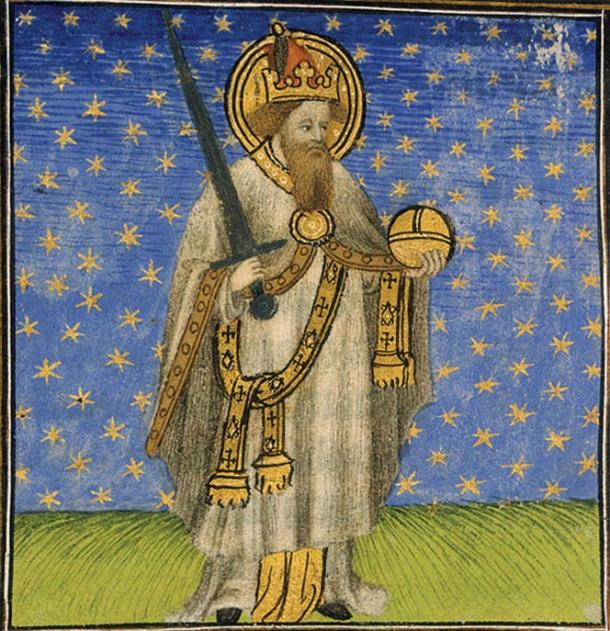
Ultimately, all roads lead back to Charlemagne – my generation’s 36th great grandfather – who was in many ways the founding father of all the noble houses of Europe. From Charlemagne we can go back even further, but not by much. Charlemagne’s great-great-great grandfather was Arnulf of Metz, a Frankish bishop born in 582, a little over a hundred years after the fall of the western Roman Empire. Though we can get tantalizingly close to the ancient world, the trail ends here. Arnulf was likely descended from the Roman senatorial class in some way, but there are no credibly documented European ancestral links through the darkness of the Dark Ages back into antiquity.
Nowadays most of us are long past the idea that royalty confers any intrinsic benefit, or that being of “good birth” means anything. Statistically speaking, probably everyone of European descent is also a descendant of Charlemagne whether they can trace that lineage or not, and, to quote authors Jiri Louda and Michael Maclagan, “they are equally likely to be descended from the man who groomed his charger”. And can we really prove that all of these recorded parents are in fact the actual biological parents, and why does that even matter anyways?
For me, our royal lineages become interesting not because it confers any sort of status, but because of the journey through time one can embark on. Once you hit the Middle Ages, royal genealogies were the only ones that were recorded, so it’s basically all we’ve got when we go back that far. And there’s something rather incredible about seeing the expanse of history through forty or so generations laid out in front of you. From Arnulf and the dawn of the Middle Ages, we can follow our own familial line down through the coronation of Charlemagne, the Norman invasion of England, the Black Death, the Protestant Reformation, the European colonization of the New World, the formation of the United States, the Industrial Revolution, and onward into the 20th and 21st centuries. At each step of the way is a family dealing with the vicissitudes of life in the small pocket of time they inhabit while raising children who will do the same after them. This generational story will end for all of us some day, for some of us sooner rather than later, but will some of us have offspring that will lead to another forty generations, each with their own triumphs and tribulations?
 The Great Oak